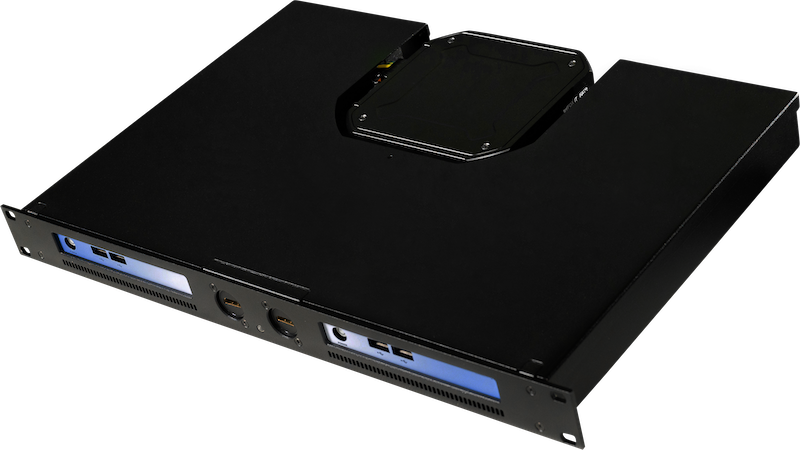
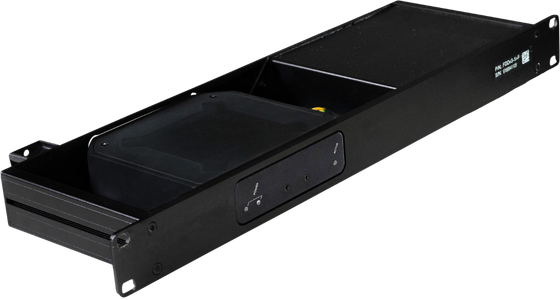
Sentyron lists CC EAL7+ and NATO COSMIC TOP SECRET for Ruggedised, alongside extended environmental ranges and shock/vibration resistance. For Andean, the CC EAL7+ claim here applies to the DataDiode component. Confirm the evaluated configuration, approval scope and environmental options for your deployment with Sentyron.
Protecting your secrets.
Protecting your assets.
Two security objectives. One physical principle.
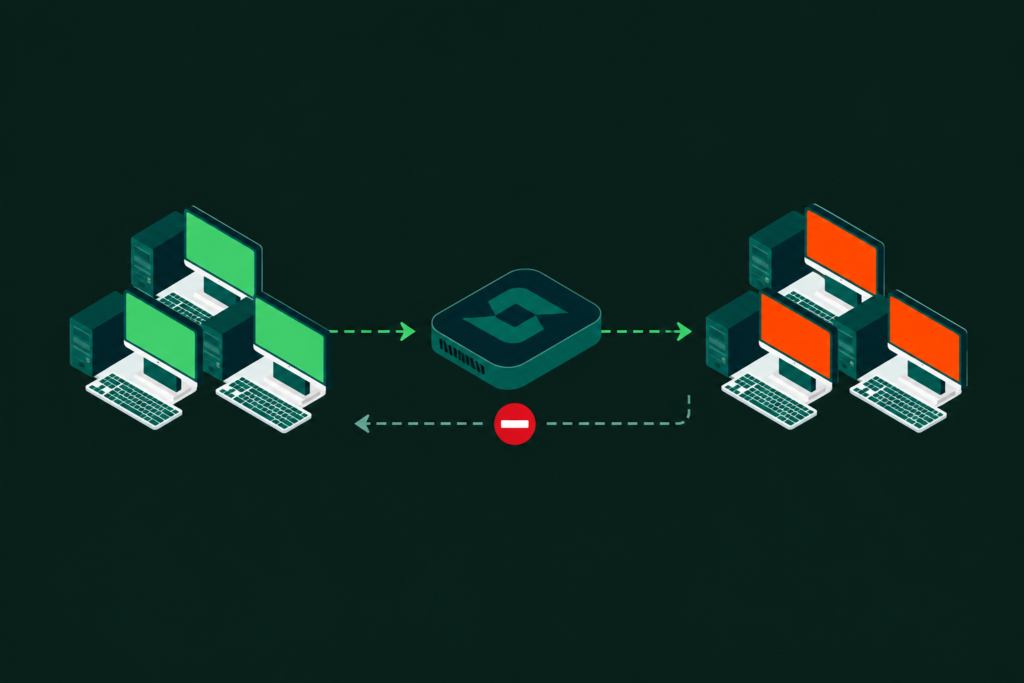
The direction depends on what you need to protect: keep sensitive information inside, or keep external commands outside.
01 / CONFIDENTIALITY
Let information in.
Keep your secrets inside.
Bring approved information into a sensitive domain while preventing information from flowing back out through the same connection.
Blocked direction: sensitive network → outside
Confidentiality objective. Validate incoming content and preserve classification controls.
02 / INTEGRITY
Let operational data out.
Keep external commands outside.
Export operational information for monitoring and analysis while preventing the receiving network from sending commands back through that boundary.
Blocked direction: corporate network → critical OT
Integrity objective. Keep visibility without adding a reverse network path.
When the threat increases,
the boundary matters more.
IEC 62443 links security requirements to the threats an industrial environment must withstand. These are Security Levels, not organisational maturity levels.
IEC 62443 / Security Levels
SL1
Casual or accidental
Protection against unintentional security violations.
SL1 / ARCHITECTURAL CONSIDERATION
Start with defined zones and flows.
Identify assets, separate domains and document which information needs to cross each boundary. Basic segmentation and clear operating practices help limit casual or accidental violations.
SL2
Intentional. Simple means.
Low resources, generic skills and low motivation.
SL2 / ARCHITECTURAL CONSIDERATION
Limit the paths an attacker can use.
Restrict communication to authorised flows and harden the controls that enforce them. Assess whether a one-way flow can remove an unnecessary bidirectional connection.
SL3
Sophisticated attacks
Moderate resources, IACS-specific skills and moderate motivation.
SL3 / ARCHITECTURAL CONSIDERATIO
Reduce dependence on shared systems.
For critical boundaries facing sophisticated threats, examine whether shared services or bidirectional connections undermine network independence. A physically one-way path can reduce exposure where the required data flow is one-way.
SL4
Highly capable adversaries
Extended resources, IACS-specific skills and high motivation.
SL4 / ARCHITECTURAL CONSIDERATION
Prioritise isolation at critical boundaries.
Against highly capable adversaries, scrutinise dependencies and residual communication paths. Hardware-enforced direction can support isolation objectives when paired with suitable content, endpoint and operational controls.
Firewall. Air gap. DataDiode.
Different controls. Different properties.
POLICY-ENFORCED
Firewall
Controls bidirectional traffic through software rules.
+ Flexible connectivity
Depends on software and configuration.
PHYSICAL DISCONNECTION
Air gap
Disconnects networks. Data moves through separate transfers.
+ No direct network path
Manual transfers take time and care.
HARDWARE-ENFORCED
DataDiode
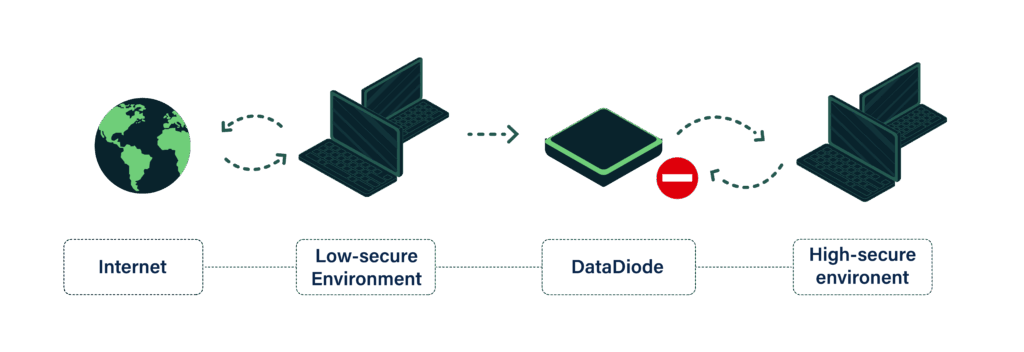
Transfers data one way. Physically blocks the return path.
+ Automated, hardware-enforced transfer
Requires suitable application integration.
Move the information.
Preserve the separation.
Real-world applications
Define the authorised flow first. Then select the proxies, validation and operating procedures that support it.
01 / VISIBILITY
OT monitoring
Deliver telemetry to IT or a SOC without an inbound control path to the plant.
OT → IT / SOC
02 / MAINTENANCE
Controlled updates
Import approved updates into an isolated domain with separate content checks.
UPDATE STAGING → PROTECTED DOMAIN
03 / INFORMATION
Classified environments
Support authorised transfers between domains. Direction and release controls follow classification policy.
APPROVED SOURCE → RECEIVING DOMAIN
Clear answers.
Stronger boundaries.
Does IEC 62443 require DataDiodes at SL3 or SL4?
No. IEC 62443 defines security requirements for systems, zones and conduits. A DataDiode can support a risk-based segmentation design, but the selected architecture must meet the applicable requirements as a whole. Security Levels are not maturity levels or product rankings.
How do bidirectional applications work across it?
Proxies handle application sessions separately on each side and transfer supported data across the one-way path. Compatibility and delivery behaviour must be assessed per protocol and use case; not every interactive application can retain its original behaviour.
Is Andean less secure than Ruggedised?
The distinction is primarily form factor and architecture: an integrated compact appliance versus a separate ruggedised setup. Both use hardware-enforced one-way communication. Choose against throughput, physical environment and the approval scope required for the exact configuration.
Faq
Choose your gateway
One security principle.
The form factor that fits.
Compact and integrated, or a separate ruggedised architecture.