
Cybersecurity is often pictured as a technical discipline: code, controls, and incident response. But ask the people actually working in the field, and a different picture emerges; one built on collaboration, trust, and understanding each other's interests.
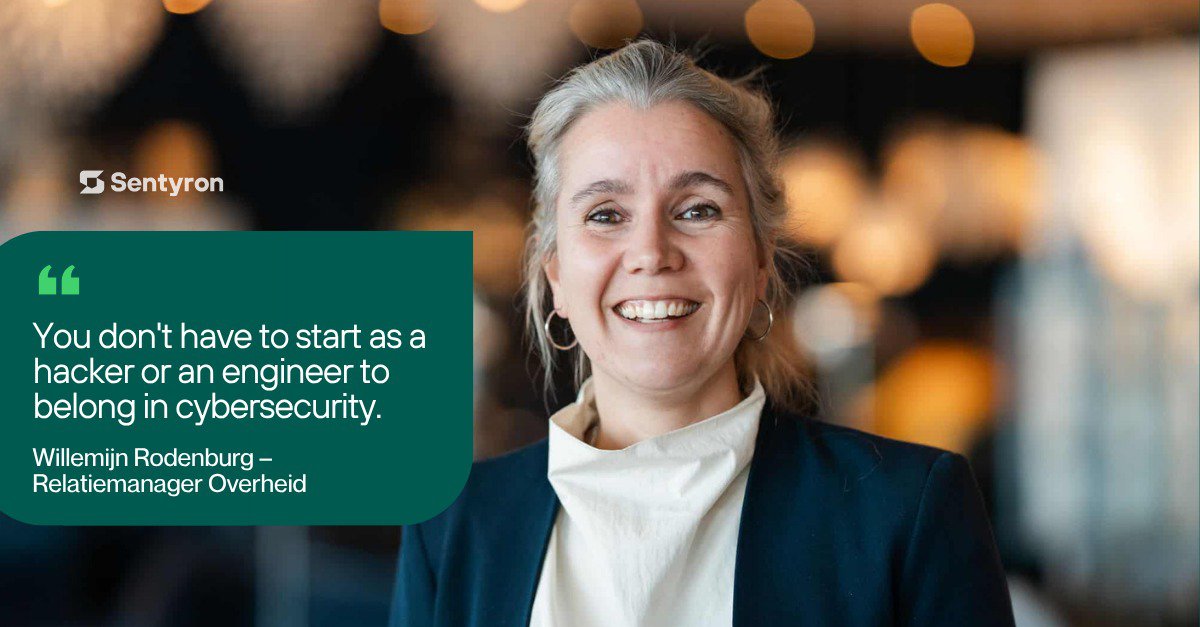
That's the idea behind our new series, Women in Cyber. Each edition, we ask a woman working in cybersecurity three questions about her path into the field, the moment that changed how she saw it, and what she thinks the industry still underestimates. We're kicking things off with Willemijn Rodenburg, Relatiemanager Overheid.
You don't need to be a specialist to matter
Willemijn didn't start out as a hacker or an engineer, and she thinks that's exactly the point:
"Cybersecurity isn't a technical island. It's a world full of people, choices, and impact. This is why I would advise my younger self that curiosity matters more than a technical background. It's a strength to be able to hold different interests and perspectives in view at the same time."
She points to how wide the field actually is, spanning cryptography and cybersecurity to policy, defense, critical infrastructure, and small and medium enterprises. And she's direct about a worry many women in the field will recognize: “Don't be afraid to be the only woman in the room. Your perspective is an asset, not a liability. You don't have to be a specialist to contribute. Everyone is welcome, every expertise is needed and valued."
The moment it clicked: security is a chain, not a job
Willemijn's shift in perspective didn't happen in a cybersecurity role at all. It happened earlier, as a consultant on Afpakken, a Dutch chain programme focused on seizing criminal assets.
"That's where I first saw up close how security works in a chain, in collaboration. How every link, however small, contributes to the bigger picture," she says. It was the moment she realized her work had real societal impact, and that realization stuck.
When she later moved into cybersecurity, the same principles turned out to apply:
- You can never do it alone
- Everyone holds a piece of the puzzle
- Collaboration, trust, and information sharing are essential
"Cybersecurity isn't a solo sport. It's an ecosystem where organizations, sectors, and people need each other to build digital resilience together. That realization changed how I look at this field for good."
The most underestimated part of the job: sitting in someone else's chair
Asked what's most underrated about working in cybersecurity, Willemijn doesn't point to a technology or a skill gap; she points to empathy.
"We tend to think from our own role: government, private sector, supplier, regulator. But real digital resilience only happens when you take the time to understand each other's interests."
Government isn't just there to set rules, business isn't just there to talk about money, a regulator isn't just there to point out what's not in order. Real cooperation, she argues, requires understanding:
- Why an organization makes certain choices
- How its processes actually work
- What interests are at stake
- What mandate it operates under
- What genuinely motivates it
"Once you see that, collaboration changes. Trust builds faster, information sharing gets easier. Cybersecurity isn't a fight between sectors, organizations, or individuals. It's a shared responsibility."